On Thursday, May 25 we drove 35 miles from Mesa Verde to Durango for an all-day train trip from Durango to Silverton on a narrow gauge train.
Durango to Silverton Train Trip
ALL ABOARD!!! Chugga Chugga, Toot Toot. YES, it did sound like that! It was a coal-burning steam engine.
We boarded the narrow gauge train in Durango for a 8:45 AM departure for a 3.5 hour ride up the San Juan Mountains to Silverton and a 3.5 hour return trip leaving Silverton at 2:30 PM. We were on the San Juan train car which included a narrator each way (and a souvenir mug with free drinks in the concession car!). 3.5 hours is a long ride each way so the narrators helped pass the time, thankfully.
The background. Because the US thought that no European Americans would want to live on the west side of the San Juan Mountains, the US Government signed a treaty with the southern Ute Indians and provided a reservation there for them. But GOLD and SILVER was discovered on the east side of the mountains and there must be the same on the west. So, the US "renegotiated (forced)" the treaty with the Utes to move them off the land and into southern Colorado and New Mexico, you know, that dry arid area. This was the Brunot agreement of 1873 and ratified by the US Congress in 1874. Settlers/miners began staking out land in 1873 but they had to wait until 1874 to file claims. The poor Utes…well, eventually oil and gas was discovered on the new reservation and the Utes are doing okay.
About 10 mining companies started mining the area after 1874 and of course they had to hire many miners, transport equipment and supplies, and transport the ore down the mountain for processing. The town of Silverton (at about 8,300 feet) was formed as a mining town supporting the miners and mines. Prior to the railroad, all passengers, supplies, and ore had to be moved to Silverton by mule and ox. In 1880, the Denver & Rio Grande Railway founded the town of Durango, the D&RG RR arrived in August of 1881, and a spur line to Silverton was completed in July of 1882.
Well, the mining industry had its ups and downs and several times the railroad line to Silverton was almost abandoned. But it survived. It was taken over during WWI by the US Government and then returned to D&RG RR after the war. Then during WWII, some of the equipment of the narrow gauge railroad was conscripted by the government for use in Alaska on the narrow gauge system there. Of the ten steam engines in use and built in 1923-1925, nine are still operational and used on the RR line today (wish my cars would last that long). The tenth was put on a ship for Alaska but the war ended and it was then pushed off the ship into the ocean so it wouldn't have to be hauled back to the railroad.
During the 1940's, uranium was mined in the area and was the source of the US nuclear fuel for WWII and the beginning of the Cold War.
The mines have now closed and the railroad is registered as a National Historic Civil Engineering Landmark and is owned and operated by American Heritage Railways and runs the original coal burning steam engines built in 1923-1925.
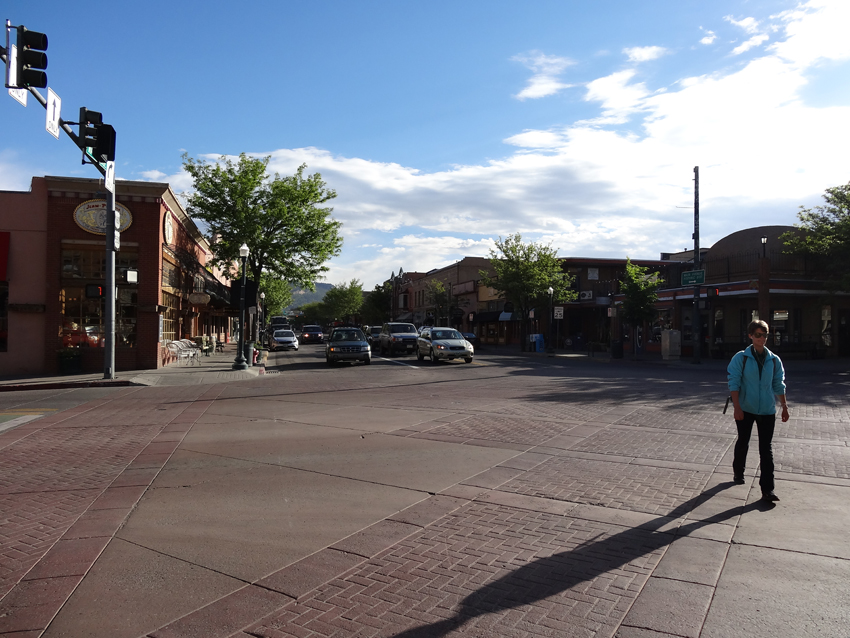 The city of Durango |
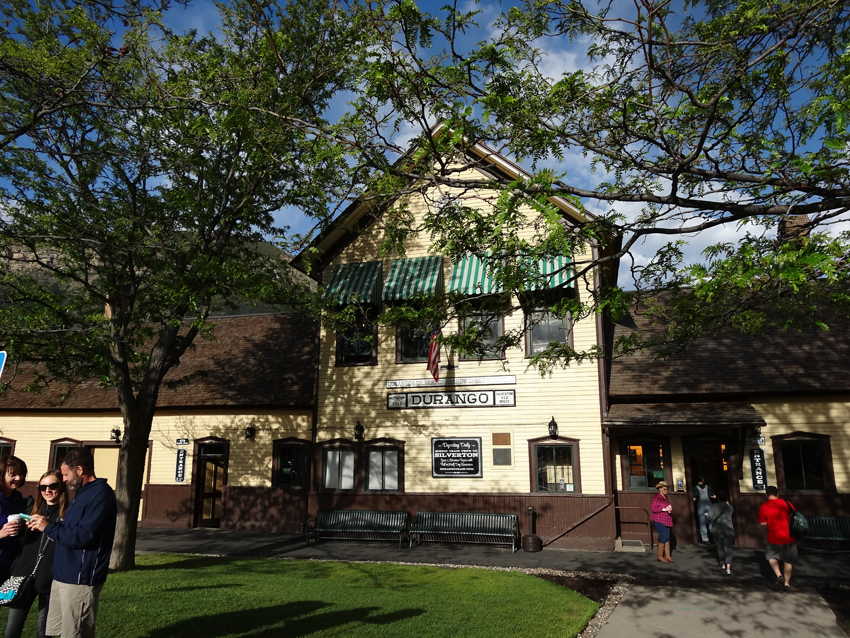 The train station |
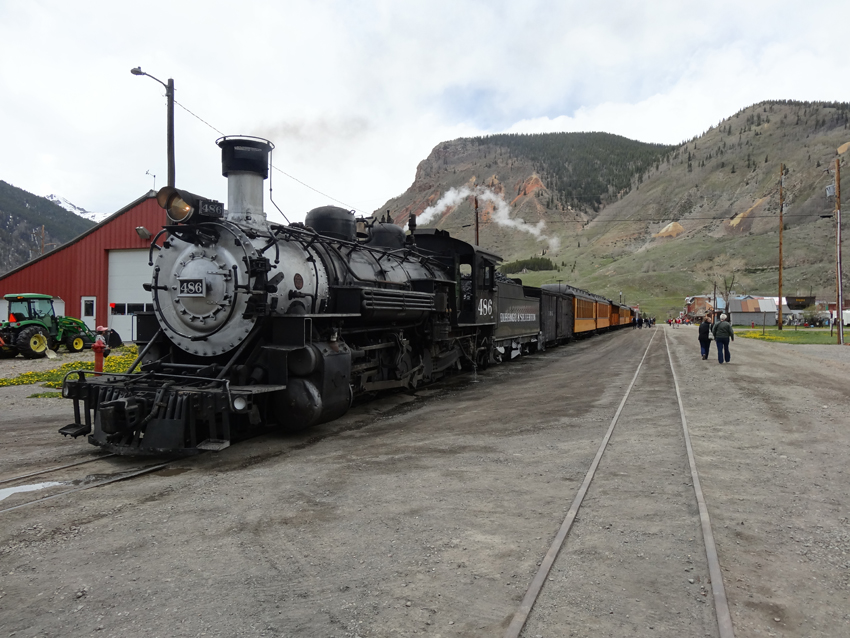 Our train (in Silverton) |
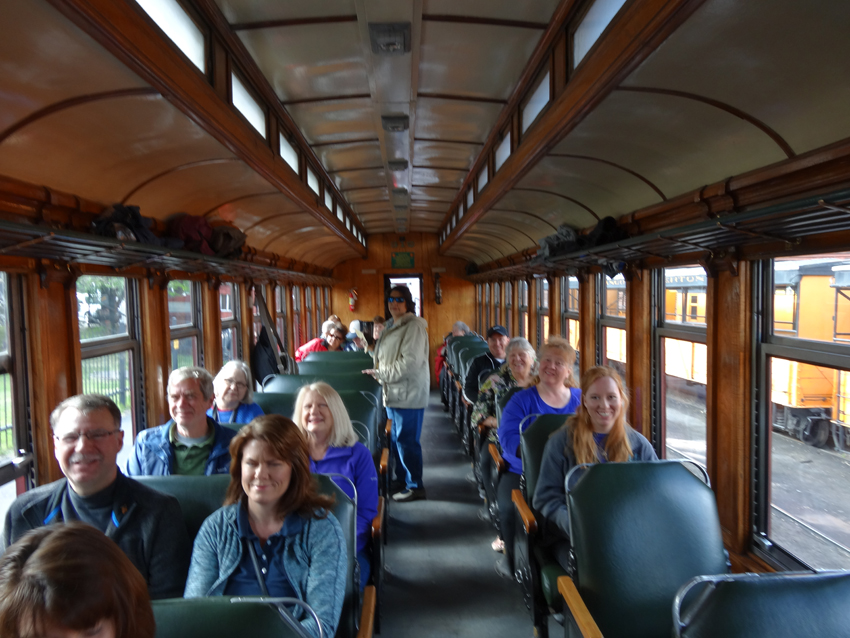 Our San Juan car (the only narrated car) |
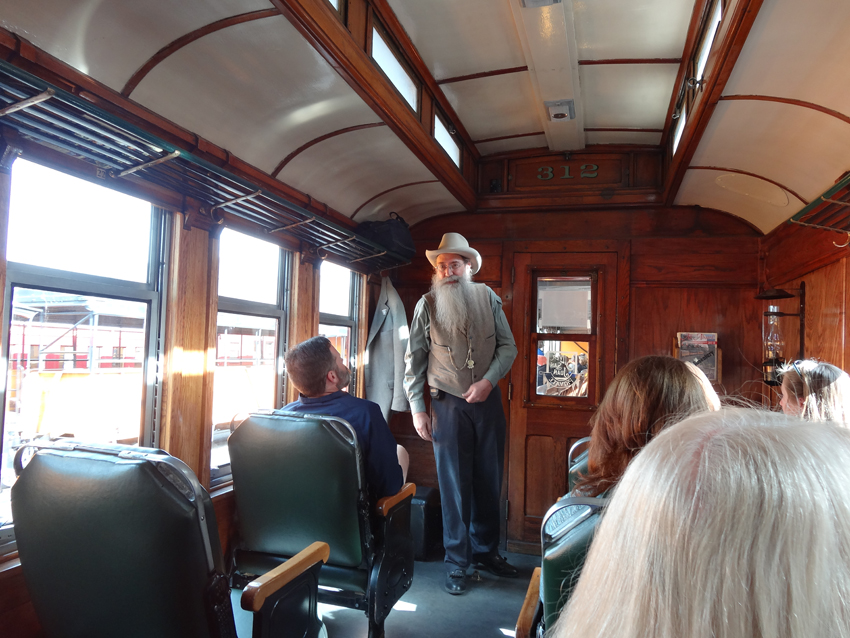 Our morning narrator |
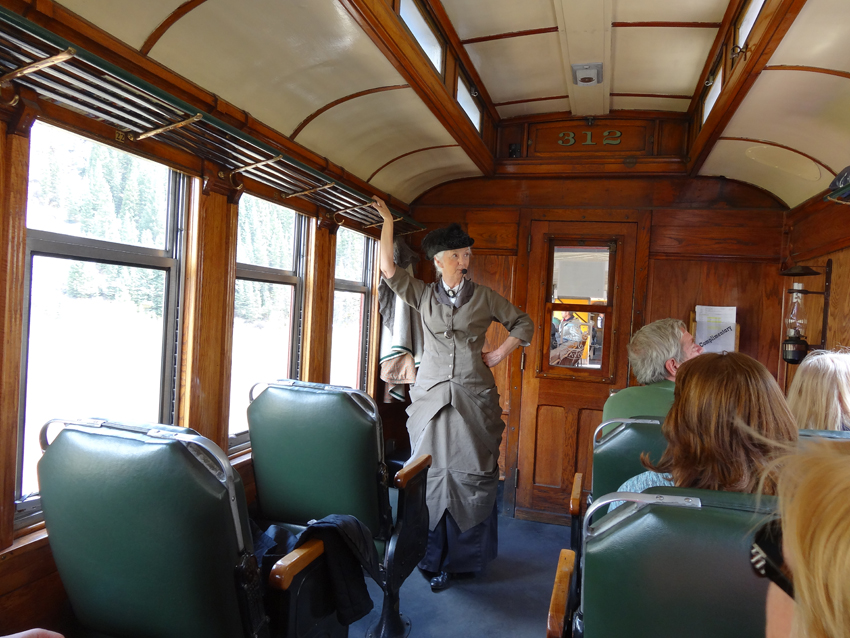 Our afternoon narrator |
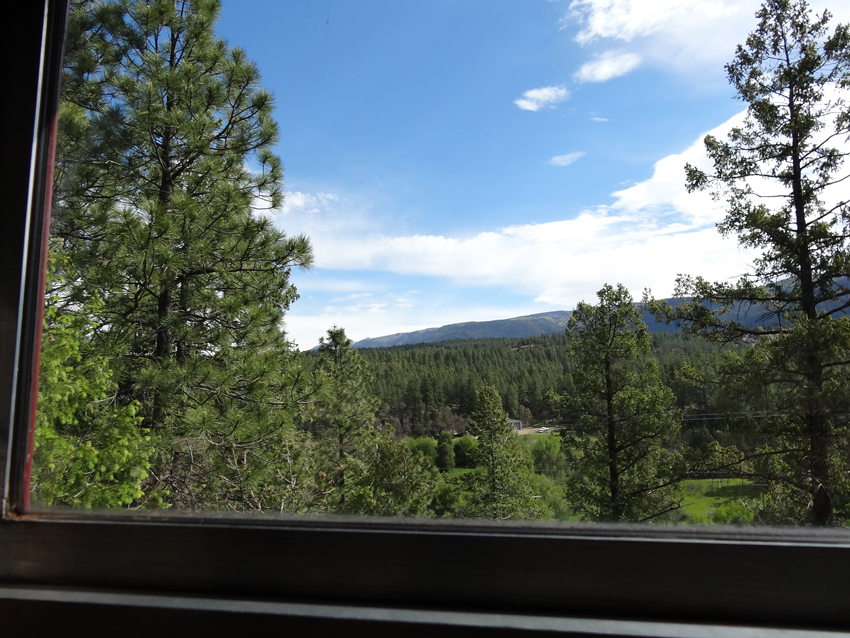 Leaving Durango |
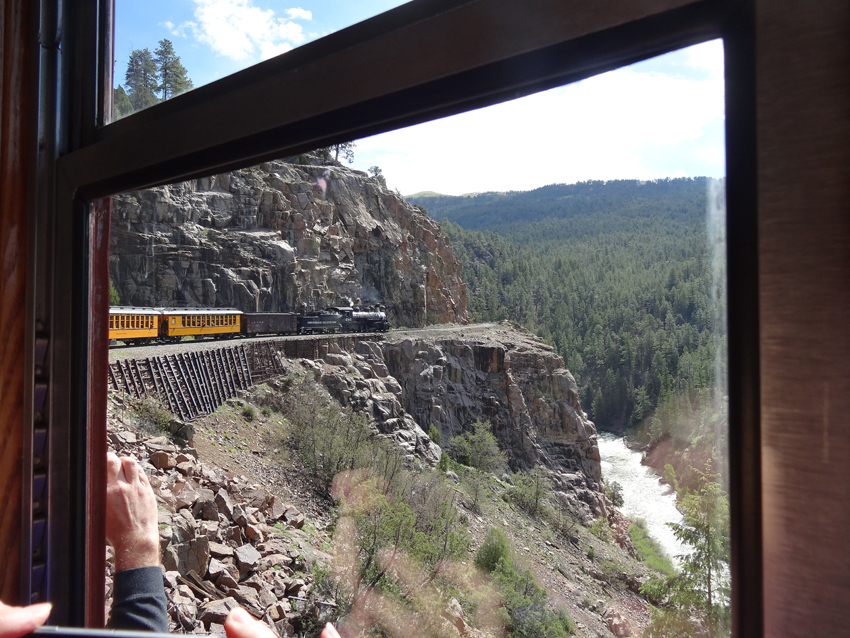 Starting to climb the mountain |
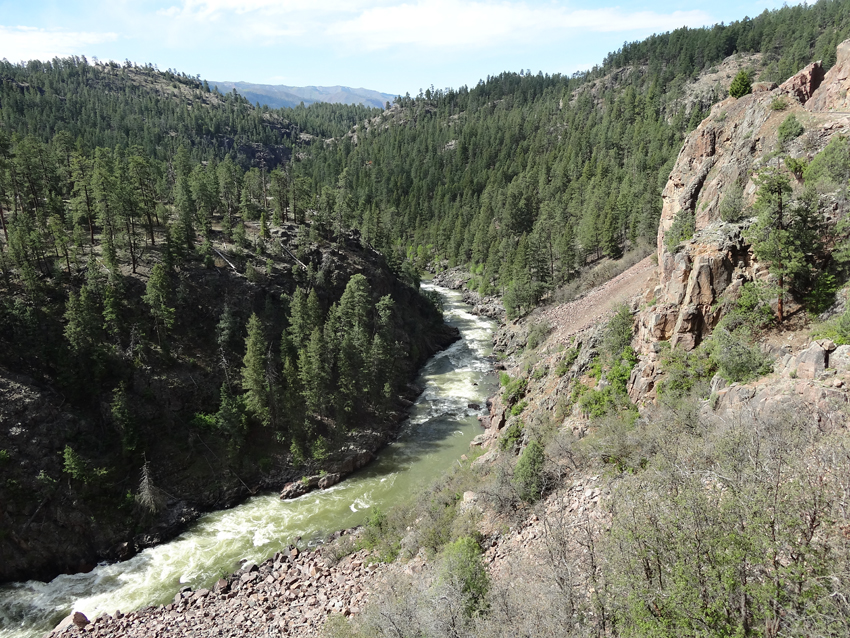 The view back |
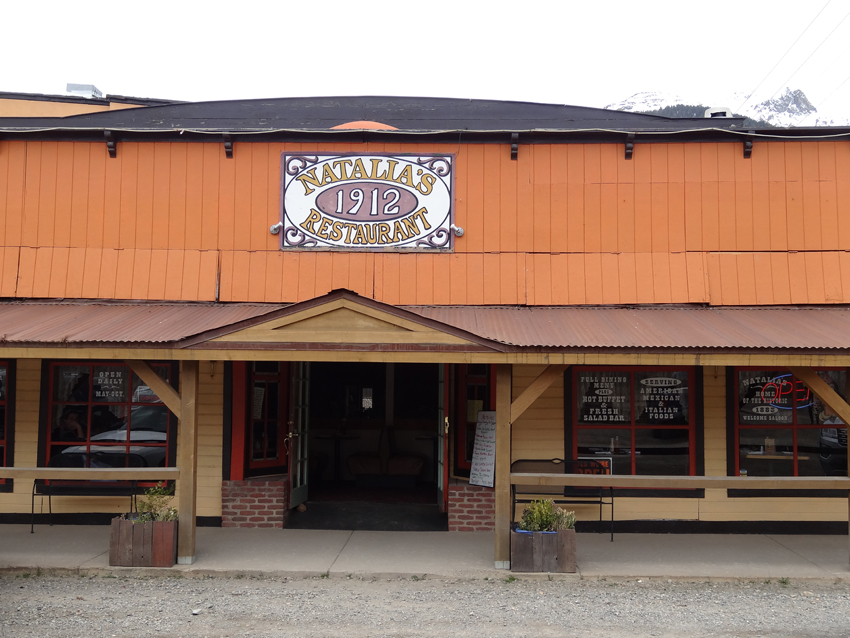 Our lunch spot (former brothel house) |
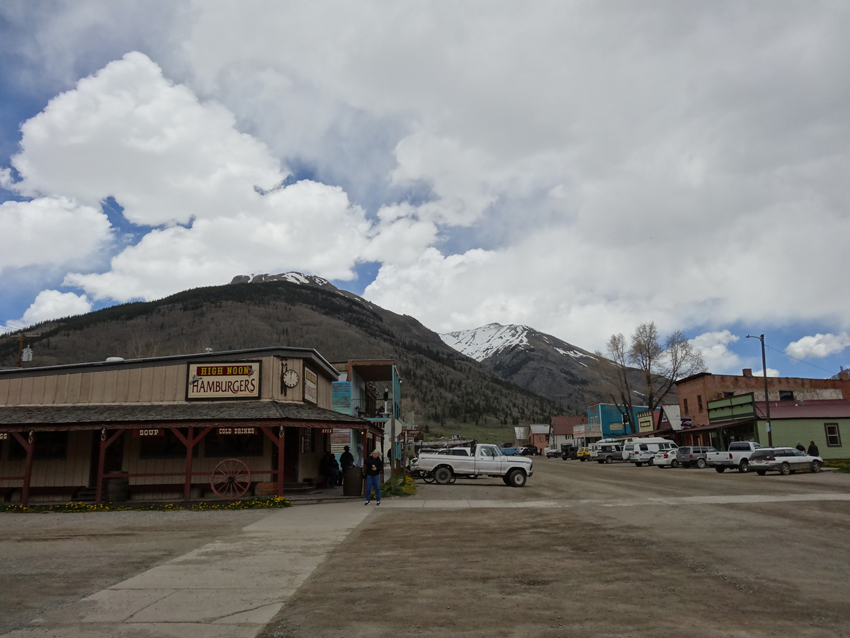 Part of the town of Silverton |
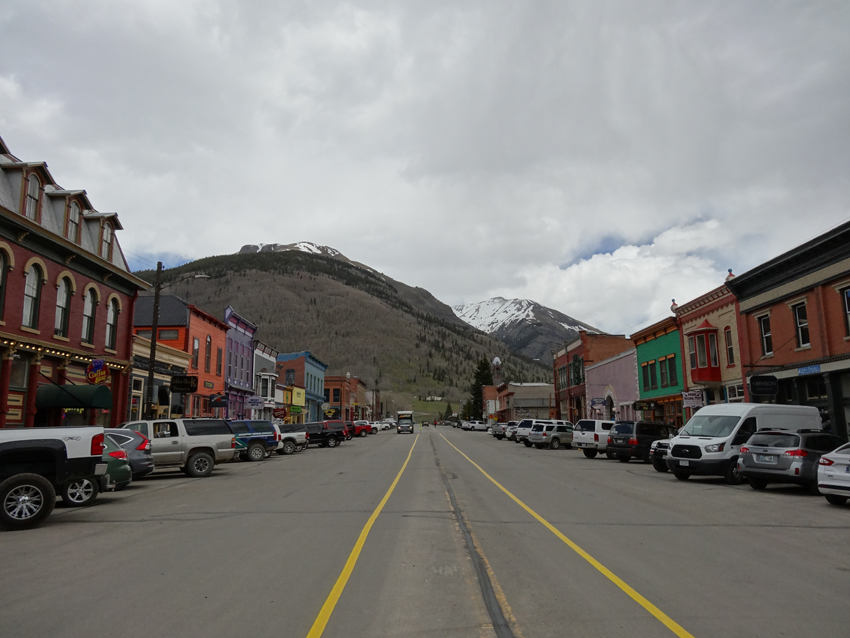 The only paved street in Silverton |
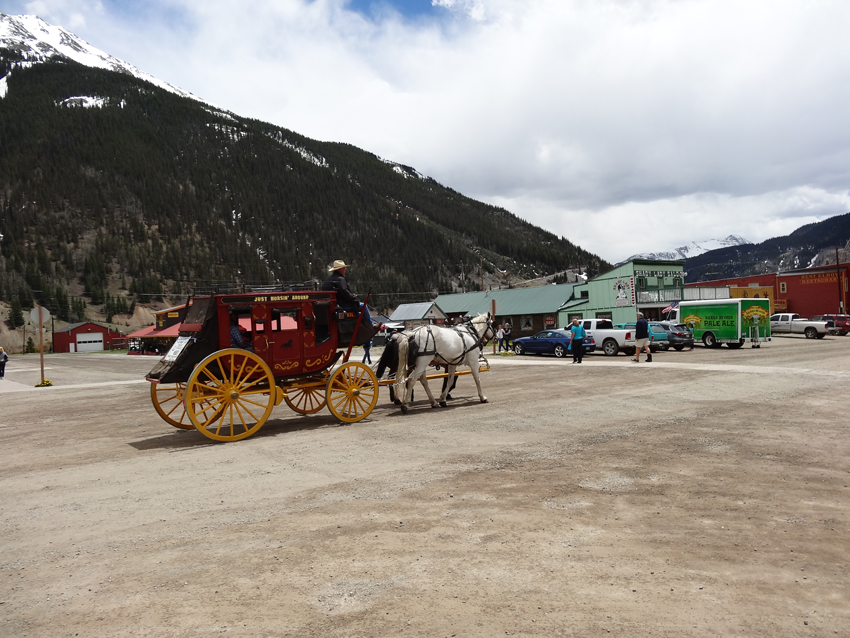 THE STAGE HAS ARRIVED!!! |
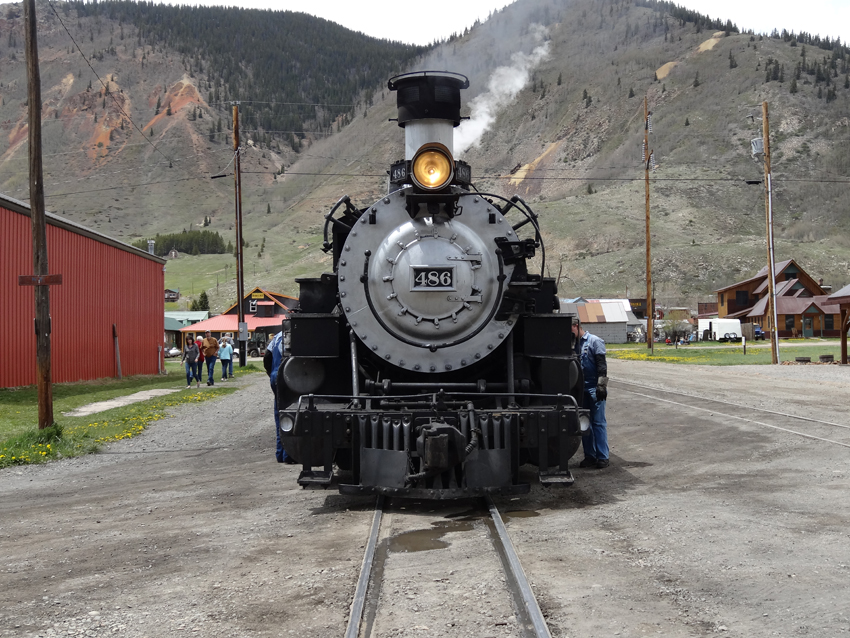 Time to head down the mountain |